
AERA2026
Mi Congreso
Iniciar sesión
Iniciar sesión
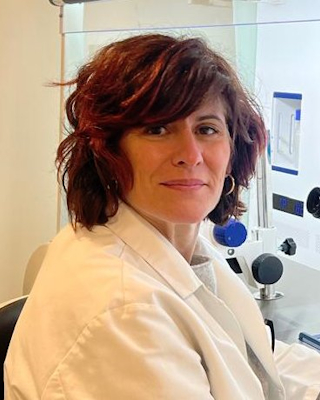

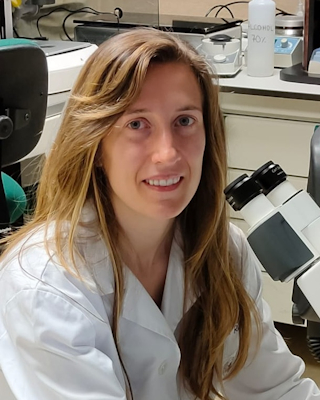
She completed her PhD in 2014 at INIA, focusing on the effects of assisted reproductive technologies on embryos and offspring. She then undertook a Marie Curie ITN Postdoctoral Fellowship at Avantea (Italy, 2015–2016), followed by a Marie Curie IF at the University of Nottingham (United Kingdom, 2016–2018), where she investigated the molecular mechanisms of pluripotency and germline specification in pig embryos.
In 2018, she returned to Spain with a Talent Attraction Postdoctoral Fellowship, and in 2020, she was awarded a Ramón y Cajal position, establishing her research group at INIA, CSIC. Since 2021, she has held a Científico Titular position and currently co-leads the Animal Genomic Engineering Group. Her laboratory investigates the molecular mechanisms governing early embryo development to reduce pregnancy loss in livestock, applying cutting-edge technologies such as CRISPR-Cas9 genome editing, single-cell RNA-seq, and extended embryo culture systems.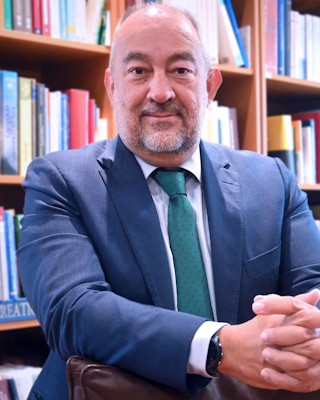
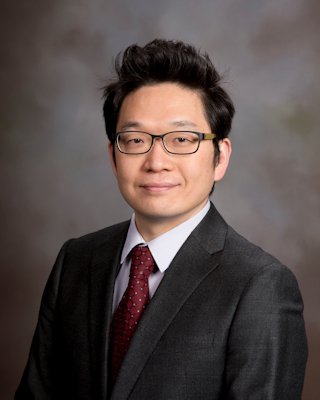
Rector of the University of Castilla-La Mancha (UCLM) since 2020 and as President of the Conference of Rectors of Spanish Universities (CRUE) since 2026. A Full Professor of Animal Production, holder of a PhD in Veterinary Medicine from the Complutense University of Madrid, and a Full Member of the Royal National Academy of Veterinary Sciences of Spain since 2007, he has developed a distinguished academic and scientific career of international standing in the field of reproductive biotechnologies applied to animal conservation and production.
Between 2011 and 2020, he served as Vice-Rector for Research and Scientific Policy at UCLM, with responsibilities for research strategy, doctoral education, and the institutional development of research. He has chaired the R&D&I Sectoral Commission of CRUE and has participated in several national bodies related to scientific evaluation, research funding, and university governance, including the Advisory Council of the Office of Science and Technology of the Spanish Congress of Deputies (Oficina C) and the Working Group for Scientific Advice to the Spanish Government (ONAC). He was also a member of the technical working group responsible for drafting the Spanish Strategy for Science, Technology and Innovation 2021–2027.
As Rector of UCLM and President of CRUE, he is actively engaged in promoting initiatives aimed at strengthening research, attracting and retaining talent, enhancing knowledge transfer, and increasing the social and economic impact of universities.
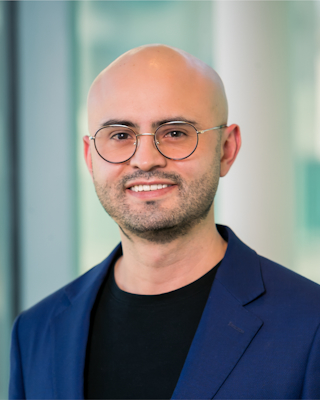
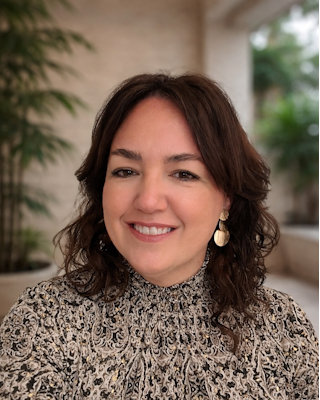
Carlos Andrés Pinzón-Arteaga, D.V.M., M.Sc., Ph.D., is a postdoctoral scientist in the Moazed Lab at Harvard Medical School and the Howard Hughes Medical Institute. His work combines biochemistry, epigenetics, embryology, and stem cell models to understand how cells establish and maintain their identity during early development, with broad implications for reproductive biology, agriculture, and regenerative medicine. He innovated technologies to manipulate DNA repair pathways for precise genome editing, enabling new large animal models of human disease and advancing applications in agricultural biotechnology. During his Ph.D. in the Jun Wu Lab at UT Southwestern Medical Center, he created the first bovine blastoids, developed a platform for large scale production of human blastoids, and helped create human embryo like structures that model the transition from implantation to gastrulation, providing new platforms to study early pregnancy and fertility. He also discovered that epigenetic silencing acts as a quality control checkpoint during the earliest stages of development, protecting the genome from instability as cells reprogram their identity and eliminating cells whose reprogramming fails, a safeguard with implications for embryo quality and pregnancy loss. His current work focuses on how gene regulatory networks, epigenetic mechanisms, and cell signaling pathways cooperate to control stem cell differentiation and preserve cell identity over time, and how their breakdown contributes to aging, cancer, and developmental disease.